
Quick answer: On Long Island and in New York City, most commercial signs cost $2,500 to $25,000 installed. Storefront channel letters typically land between $3,500 and $12,000, monument signs run $5,000 to $25,000, and large illuminated pylon signs start around $10,000 and climb past $50,000. Your final number comes down to three things: the materials, the installation labor, and the permits your town or the NYC Department of Buildings requires.
Ranges below reflect projects Valle Signs & Awnings has fabricated and installed across Nassau, Suffolk, and the five boroughs. Updated January 2026.
If you have searched for sign pricing and come away more confused than when you started, you are in good company. Most of what is published online is either a national average that ignores what installation actually costs in a place like Manhattan, or a range so wide it tells you nothing. A vinyl window graphic and a twenty-foot illuminated pylon are both technically commercial signs, and pricing them the same way helps nobody.
We have been fabricating and installing signs out of our Copiague shop since 2002, so the numbers below come from real quotes on real Long Island and New York City buildings. Here is how to build a budget you can actually plan around.
Commercial Sign Cost at a Glance
Materials are only part of the picture, so this table separates what the sign itself costs from what you should expect to pay once it is fabricated, permitted, and hanging on your building.
| Sign type | Materials only | Typical installed cost (Long Island & NYC) |
|---|---|---|
| Vinyl signs & window graphics | $5–$15 per sq ft | $400–$1,200 |
| Flat panel & aluminum signs | $20–$50 per sq ft | $1,500–$5,000 |
| Lightbox / cabinet signs | $1,200–$4,500 | $2,500–$8,000 |
| LED channel letters | $150–$500 per letter | $3,500–$12,000 |
| Commercial awnings | $800–$5,000 | $1,500–$8,000 |
| LED & electronic message centers | $5,000–$50,000 | $8,000–$60,000+ |
| Monument signs | $3,000–$15,000 | $5,000–$25,000 |
| Pylon signs | $8,000–$40,000 | $10,000–$50,000+ |
Why Commercial Sign Estimates Vary So Much
Every sign project breaks into three cost buckets, and once you understand how each one behaves, the wide ranges above stop feeling arbitrary.
- Materials — what the sign is made of, and how it is lit
- Installation and labor — what it takes to get it safely mounted and powered
- Permits and compliance — what your municipality requires before anyone touches the building
Each bucket moves independently. A modest channel letter set on a single-story Bay Shore storefront and the identical letters on a Midtown Manhattan facade can differ by thousands of dollars, and almost none of that difference is the sign itself. It is the lift, the sidewalk protection, the licensed installer, and the permit.
How Much Do Signs Cost by Material and Type?
Materials are usually the largest single line item, and the spread is wide depending on what you choose.
How Much Do Vinyl Signs Cost?
Vinyl remains the most affordable option for businesses that need short to medium-term signage, running roughly $5 to $15 per square foot for the material. A standard 4×8 vinyl sign works out to about $160 to $480 in materials alone, and $400 to $1,200 once it is produced and applied. It is a strong choice for window graphics, seasonal promotions, and secondary signage, though it will not carry your brand the way a dimensional sign does.
How Much Do Aluminum and Flat Panel Signs Cost?
Aluminum cabinet signs and flat panel signs are a meaningful step up in durability, typically $20 to $50 per square foot in materials. A mid-sized 10×4 aluminum sign lands around $800 to $2,000 in materials and $1,500 to $5,000 installed. These hold up well against Long Island winters and coastal salt air, which is a real consideration anywhere south of Montauk Highway.
How Much Do Channel Letter Signs Cost?
Individual illuminated channel letters are the most popular choice for retail storefronts, and for good reason. Materials run $150 to $500 per letter depending on size, return depth, and illumination type. A ten-letter business name with standard LED lighting comes to roughly $1,500 to $5,000 in materials, and most storefront channel letter projects finish between $3,500 and $12,000 installed. Backlit and halo-lit letters sit at the upper end of that range.

How Much Do LED and Electronic Message Center Signs Cost?
Programmable LED displays carry a higher upfront cost but pay it back in flexibility, since you can change the message daily without reprinting anything. Entry-level units start around $5,000 for small displays and climb past $50,000 for large, high-resolution outdoor boards. Worth knowing before you budget: many Long Island villages restrict or outright prohibit changeable-copy and animated displays, so confirm your local sign code before you fall in love with a spec.
How Much Do Monument and Pylon Signs Cost?
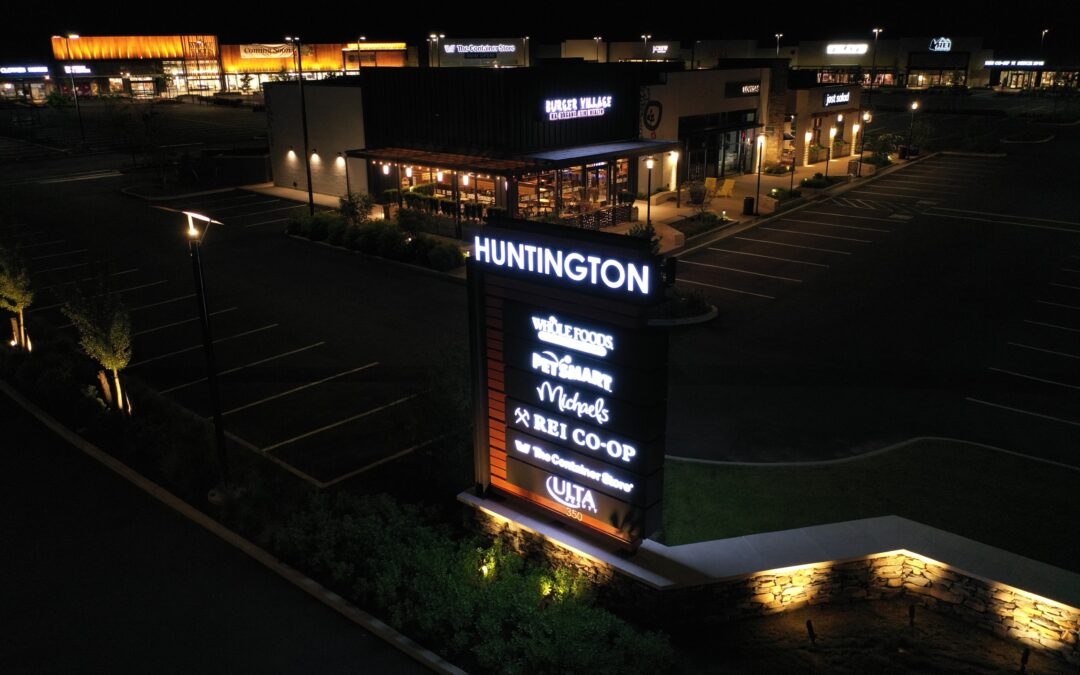
Freestanding structures are the largest investment on this list. A monument sign for a small business, medical office, or office park generally runs $5,000 to $25,000 installed, with the concrete footing and site work making up a real share of that. Pylon signs for shopping centers, hotels, and highway-visible properties start around $10,000 and can exceed $50,000 depending on height, structural engineering, and illumination. The tallest highway pylons along corridors like the LIE or Sunrise Highway can pass $100,000 once engineering and steel are accounted for.

How Much Do Commercial Awnings Cost?
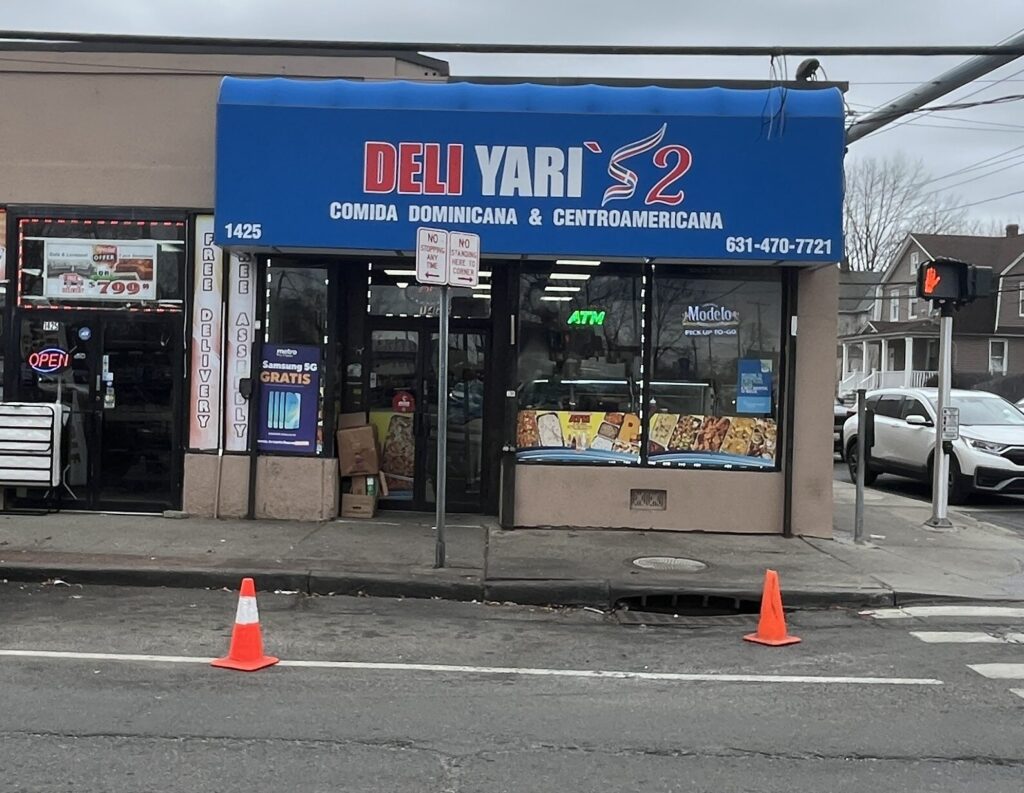
Awnings get left out of most sign cost guides, which is a shame, because they are often the most cost-effective way to add branding, shade, and usable square footage at once. A standard branded storefront awning typically runs $1,500 to $8,000 installed depending on projection, frame construction, and whether it is illuminated.
Outdoor dining enclosures are their own category and price accordingly, since they involve heavier framing, wind-load engineering, and in many towns a separate approval track. If you are weighing an awning against a traditional sign, our guide on when it is time to replace a commercial awning covers the durability side of the decision.
Commercial Sign Installation Cost
Materials only get you so far. Getting the sign up safely and legally is a separate cost, and it is the one business owners underestimate most often.
Standard installation labor runs $50 to $150 per hour depending on crew size and complexity. A straightforward ground-level or single-story installation might add $200 to $500. Once you introduce height, the math changes quickly, and a rooftop or upper-floor installation requiring a boom lift, rigging, and an expanded crew can push labor past $2,000 on its own.

The factors that move installation cost the most:
- Height and access — lifts, scaffolding, and street closures add both equipment cost and calendar time
- Electrical connections — any illuminated sign needs a licensed electrician, typically adding $300 to $1,500
- Custom fabrication — non-standard sizes and shapes mean additional shop hours before a crew ever leaves the yard
- Removing the old sign — budget $200 to $800 for safe removal, disposal, and patching the facade underneath
Why Installation Costs More in New York City Than on Long Island
This is where the two markets genuinely diverge. In the five boroughs, any sign installed above a certain height must be hung by a contractor holding a NYC Special Sign Hanger License issued by the Department of Buildings. That is a specific credential, not a general contractor’s license, and the pool of firms that hold one is small. Add sidewalk sheds, street occupancy permits, restricted delivery windows, and crane or lift staging on a Manhattan block, and the same channel letter set can cost meaningfully more to install than it would in Hauppauge.
Valle Signs holds that license, which is a large part of why we work as comfortably in Queens and Brooklyn as we do in Nassau and Suffolk.
Sign Permit and Compliance Costs
This is the bucket that surprises people most, and skipping it creates far more expensive problems later. Nearly every commercial sign installation requires at least one permit, and many require several.
Typical fees by permit type:
- Zoning and sign permits: $50 to $500 depending on the municipality. Some jurisdictions charge a flat fee; others calculate by sign square footage.
- Electrical permits: $100 to $400 for illuminated signs requiring a dedicated circuit
- ADA compliance: directory listings, suite numbers, and interior wayfinding carry mounting-height and tactile requirements that can add $200 to $1,000 or more
- Landlord or property approval: not a government fee, but a required step that routinely adds weeks
Long Island Sign Permits: It Depends on Your Village
Long Island is not one jurisdiction. Between Nassau and Suffolk there are more than ninety incorporated villages, and a great many of them maintain their own sign code on top of the town code. A storefront in the Village of Rockville Centre answers to different size and illumination rules than an identical storefront a few minutes away in unincorporated Town of Hempstead. Garden City, Mineola, Freeport, and Long Beach each run their own review. In Suffolk, the Towns of Babylon, Islip, Huntington, and Brookhaven all have distinct submission requirements and meeting calendars.
Practically, this means two things. Approval timelines vary far more than fees do, and the single fastest way to blow a grand opening date is to design a sign that your village’s code does not allow. Our Long Island sign permit guide walks through the process town by town.

NYC Sign Permits
New York City adds layers that Long Island simply does not have. Filings go through the Department of Buildings, illuminated and projecting signs face additional scrutiny, and any property inside a Landmarks Preservation Commission historic district requires LPC review before the DOB will act. Special districts, including the Special Midtown District around Times Square, impose their own sign regulations on top of everything else. Budget accordingly on both money and calendar.
Plan for two to eight weeks for standard permit approval across most of Long Island, and longer in NYC, in a landmark district, or anywhere a variance is required.
Timeline and Hidden Costs Worth Planning For
Beyond the three main buckets, a handful of line items catch owners off guard with real regularity.
Site preparation. Concrete footings for monument signs, conduit runs, and facade repair after an old sign comes down all land before the new sign goes up.
Electrical upgrades. Older Long Island commercial buildings frequently lack sufficient power at the sign location. Running new conduit or upgrading a panel to support illuminated signage can add $500 to $3,000.
Design and engineering fees. Custom signs often require stamped drawings or structural review, particularly for pylon signs and anything mounted to a building facade. Budget $300 to $1,500.
Production lead time. Custom fabrication typically takes two to six weeks after design approval. Build that into your launch timeline, especially around a seasonal opening.
One more worth naming: the cost of not maintaining what you install. A half-lit channel letter set reads as a closed business. We covered the economics of this in why preventative sign maintenance saves money.
How to Estimate Your Sign Budget
Use this framework before you start collecting quotes:
- Choose your sign type and pull the range from the table above
- Estimate installation based on height, access, and whether it is illuminated
- Add permit costs for your specific village, town, or borough
- Add a 10% buffer for site prep, revisions, and scope you have not thought of yet
Here is what that looks like for a real-world project: a twelve-letter LED channel letter sign on a single-story Route 110 retail storefront in Farmingdale, mounted at standard storefront height with an existing electrical run nearby.
| Materials (12 LED channel letters) | $2,400 |
| Installation and electrical connection | $1,800 |
| Town of Babylon sign permit | $350 |
| 10% contingency | $455 |
| Estimated total | ~$5,000 |
Move that same sign to a third-floor Manhattan facade and the installation line alone can triple, because you have added a licensed sign hanger, a lift, and street occupancy. That is a planning number, not a quote. A real quote accounts for your exact address, building condition, and local code.
When to Bring in a Professional Early
Some projects are simple to estimate from a table. Others carry enough variables that an early site visit saves money rather than costing it. Get a specialist involved up front if:
- Your sign will be mounted on a rooftop or above the second floor
- The installation involves electrical work or a new conduit run
- You are in a landmark district or a village with restrictive sign code
- You are replacing an existing sign and do not know what is behind the current mounting points
- Your landlord or property manager has requirements beyond standard code
- You are installing anywhere in the five boroughs, where a licensed sign hanger is not optional
Why Long Island Businesses Budget With Valle Signs
Valle Signs & Awnings has been a family-owned fabricator and installer since 2002. We manufacture in a 25,000-square-foot UL-listed facility in Copiague, run more than a dozen project managers, and hold the NYC Special Sign Hanger License that lets us work across all five boroughs as well as Nassau and Suffolk.
Because we fabricate and install in-house rather than brokering the work out, the number we quote is the number you pay. We have handled signage for national brands including Moe’s Southwest Grill, Big Lots, Aloft Hotels, M&T Bank, and Sportime, alongside hundreds of independent Long Island storefronts. Our customers have rated us 4.8 out of 5 across 108 Google reviews.
Ready to Get a Real Number?
Now that you know what goes into a commercial sign budget, the next step is a quote built around your actual building. We walk every client through materials, installation, and permit requirements before any work begins, so there are no surprises halfway through.
Request an estimate and get a clear, itemized breakdown for your project.
Valle Signs & Awnings Inc.
55 Decker St, Copiague, NY 11726
(516) 408-3440
Serving Nassau County, Suffolk County, and all five boroughs of New York City
Frequently Asked Questions
How much does a commercial sign cost on average?
Most commercial signs on Long Island and in New York City cost between $2,500 and $25,000 installed, with the average storefront project landing around $5,000 to $8,000. Simple vinyl and flat panel signs can come in under $1,500, while large illuminated pylon signs for shopping centers regularly exceed $50,000. The three factors that determine where you land are the sign type and materials, the difficulty of the installation, and the permit requirements in your specific village, town, or borough. Getting a site-specific quote is the only way to narrow a range this wide into a real number.
How much does commercial sign installation cost by itself?
Installation labor typically runs $50 to $150 per hour, which works out to roughly $200 to $500 for a straightforward ground-level or single-story sign. Rooftop installations, upper-floor mounting, and anything requiring a boom lift or scaffolding commonly push installation past $2,000. Illuminated signs add a licensed electrician, generally another $300 to $1,500. Installation costs more in New York City than on Long Island because the DOB requires a contractor holding a Special Sign Hanger License, and city work often involves sidewalk protection and street occupancy permits.
How much does a channel letter sign cost?
Channel letters are priced per letter, typically $150 to $500 each depending on letter height, return depth, and how they are illuminated. A ten to twelve letter storefront sign generally costs $3,500 to $12,000 fully installed. Front-lit LED letters sit at the lower end of that range, while backlit and halo-lit letters cost more because they require additional fabrication and careful standoff mounting. Letter height is the single biggest driver, so a business name with fewer, larger letters can easily cost more than one with more, smaller letters.
Do I need a permit for a business sign on Long Island?
Almost certainly yes. Nearly every commercial sign installation on Long Island requires a permit, and if your business sits inside one of the more than ninety incorporated villages in Nassau and Suffolk, you may be answering to a village sign code on top of the town code. Fees generally run $50 to $500, but the timeline matters more than the fee: expect two to eight weeks for standard approval, and longer if your sign needs a variance. Installing without a permit risks fines and an order to remove the sign entirely.
How much does a sign permit cost in NYC?
NYC sign permit costs vary by sign type, size, and whether the property sits in a special or historic district, and filings go through the Department of Buildings rather than a local town hall. Beyond the filing fee itself, budget for professional filing services, and for Landmarks Preservation Commission review if your building is in a historic district. The bigger difference from Long Island is the requirement that installation be performed by a contractor holding a NYC Special Sign Hanger License. Because DOB fee schedules change, confirm current amounts before finalizing your budget.
How long does it take to get a commercial sign made and installed?
Plan on six to twelve weeks from design approval to a finished, installed sign. Custom fabrication alone typically takes two to six weeks, and permit approval runs another two to eight weeks depending on your municipality, often overlapping with fabrication. Landmark districts, variances, and NYC filings extend that. If you are working toward a grand opening or a lease deadline, start the sign conversation earlier than feels necessary, because the permit calendar is the part nobody can compress.
Is it cheaper to repair an existing sign than replace it?
Usually, yes. Retrofitting an existing cabinet or channel letter set with LED components often costs a fraction of a full replacement while cutting energy use substantially, and it typically avoids a new permit since the sign’s size and location are unchanged. Replacement makes more sense when the cabinet or structure has corroded, when your branding has changed, or when the existing sign no longer meets current code. A site inspection will tell you quickly which side of that line you are on.